
Drakes Theatre Class work while attending the University of West Florida
Architecture and Decor
Observation Journal #1 - The Ancient World & Egypt
Throughout the semester, you will make observation journal entries. These entries should be sketches and photos with written notations about your observations related to the historical period we are covering. Your sketches may be of architecture, furniture, and/or ornamental details that reflect the period. Make notations about the object(s) you have selected. For example, what period is it from? Is it a contemporary piece or a building that reflects a historical period and the materials used to make it


The “Great American Pyramid” known as the Bass Pro Pyramid, formerly a sports arena. Its look was inspired by the Egyptian Pyramids and due to it being in Memphis, known as the City on the Nile of the new world
Observation Journal #2 - Greek Style ( 1000 - 146 BCE)
Throughout the semester, you will make observation journal entries. These entries should be sketches and photos with written notations about your observations related to the historical period we are covering. Your sketches may be of architecture, furniture, and/or ornamental details that reflect the period. Make notations about the object(s) you have selected. For example, what period is it from? Is it a contemporary piece or a building that reflects a historical period and the materials used to make it
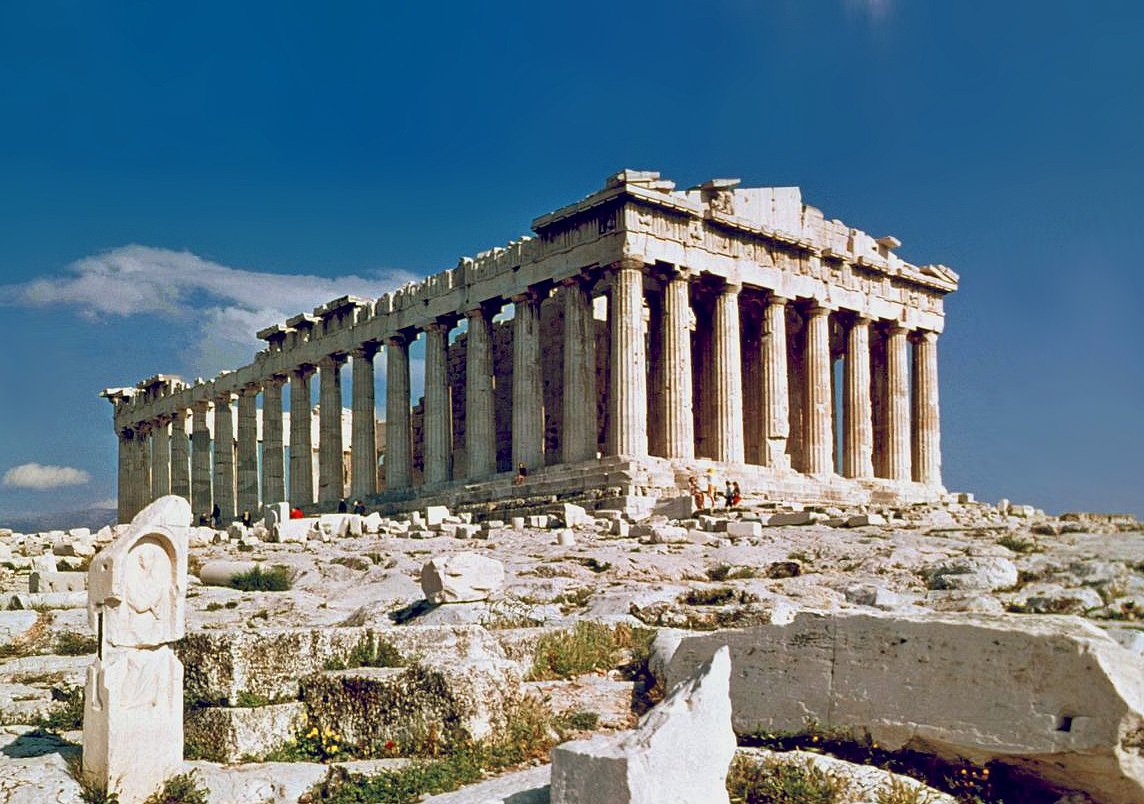
Greek temples (1000–146 BCE) were built to look perfect on the outside rather than to hold large groups inside, because most worship happened at an outdoor altar. Architects focused on balance, symmetry, and column styles (Doric, Ionic, Corinthian) so the temple looked harmonious from every side, almost like a giant sculpture. They even made small visual corrections—like slightly curved floors and columns that bulge in the middle (entasis)—so the building would appear straight to the human eye. This can be seen in the Parthenon in Athens, the Temple of Hera at Paestum, and the Temple of Athena Nike, all showing how appearance and proportion were the most important parts of Greek temple design.